Four Books Every Writer Should Read: Lessons in Writing Craft
One of the best ways to develop your creative writing is to read.
I love losing myself in a book, but these days I also try to read as a writer. For me, that means not just getting caught up in the story, characters or ideas, but occasionally stepping back and asking: How has the writer done this?
How have they created that character? Why does this particular point of view work? How have they structured the story? What makes the voice so compelling?
Reading in this way has become an important part of my own creative practice, as well as something I encourage writers to do in my creative writing workshops and writing retreats.
Over the summer, I read and reread four books that excited, surprised and delighted me, and occasionally emotionally demolished me. Each offers a very different lesson in the craft of writing.
1. My Mother Mary Comes to Me by Arundhati Roy
In My Mother Mary Comes to Me, writer and activist Arundhati Roy explores her complex relationship with her mother and the ways that family, place and politics shape our inner lives.
What I particularly loved was Roy's refusal to flatten a complicated person into a simple character. This is especially important in memoir and autobiographical writing, where it can be tempting to make the people in our lives fulfil neat narrative roles.
What writers can learn from it
How to write complex characters without simplifying them.
Roy also demonstrates how an intimate story about a family can open out onto much bigger social and political questions. For anyone interested in writing memoir, narrative nonfiction or politically engaged writing, there is so much to learn here about moving between the personal and political.
2. The Vegetarian by Han Kang
I reread Han Kang's extraordinary novel The Vegetarian because its explorations of female sexuality and madness connect with themes I'm interested in exploring in my own work.
I benefited enormously from reading it for a second time.
The novel is told in three parts from three different perspectives, while the woman at the centre of the story remains strangely inaccessible to us. We experience her transformation largely through the people around her.
What writers can learn from it
How to use multiple perspectives while keeping a single character at the centre of a story.
It is also a remarkable lesson in restraint. When writing about subjects as emotionally charged as sex, violence and psychological distress, it can be tempting to make the prose itself increasingly dramatic. Han Kang shows just how powerful the opposite approach can be.
3. Reservoir Bitches by Dahlia de la Cerda
I was blown away by Dahlia de la Cerda's Reservoir Bitches, an interconnected short-story collection giving voice to thirteen women living on the violent margins of contemporary Mexico and finding ways to survive, resist and live.
One of the most interesting things about the collection from a craft perspective is its scale. These are individual stories, but together they accumulate the scope, momentum and interconnectedness of a novel.
What writers can learn from it
How to create interconnected short stories that build into a larger narrative world.
It is also worth reading for its extraordinary tone. These are women living through extremely difficult circumstances, but the writing refuses to reduce their lives to suffering. There is humour, adventure, desire, irreverence and joy alongside violence and precarity.
For short-story writers, it is a brilliant example of how individual pieces can speak to one another and become something larger than the sum of their parts.
4. Brian by Jeremy Cooper
Jeremy Cooper's Brian, published by Fitzcarraldo Editions, was recommended to me by my local independent bookshop, Gloucester Road Books.
The novel follows a solitary middle-aged man living in Camden whose growing obsession with cinema brings him into the world of the BFI and, gradually, into connection with other people.
Its subject might sound quiet, but that is part of what makes the book so interesting.
What writers can learn from it
How to use close third-person narration to capture the minutiae of someone's inner life.
It is also a fascinating example of how another art form can be woven into fiction. Film and film criticism aren't simply decorative references in Brian. They become integral to character, structure and the way Brian understands himself and the world.
If you're trying to incorporate art, music, politics, history or another specialist interest into your own fiction, it is well worth studying how Cooper does it.
Reading as part of a creative writing practice
Books like these inevitably find their way into my teaching.
In my 10-Week Online Creative Writing Workshop, we read fiction, creative nonfiction and poetry alongside developing our own work. Reading other writers gives us a shared language for talking about craft, but more importantly, it reminds us how many different ways there are to make a piece of writing work.
The same principle runs through my writing retreats in Pembrokeshire. Writing doesn't happen in isolation. Reading, walking, conversation, rest, looking at art and encountering other people's work are all part of sustaining a creative practice.
Sometimes the most useful thing we can do for our own writing is simply to spend some time inside somebody else's.
Explore my online creative writing workshops and writing retreats for more opportunities to develop your writing and creative practice.
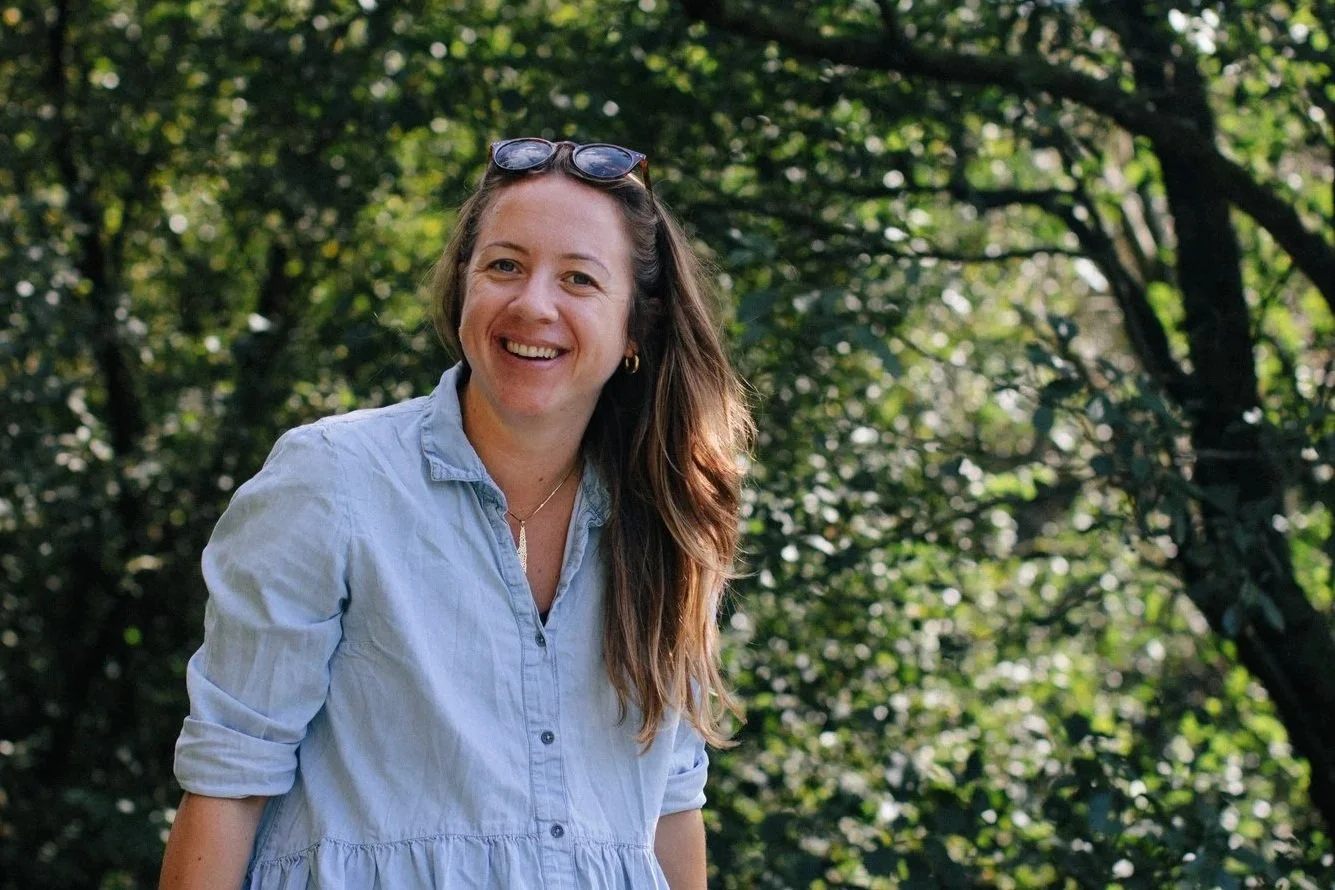
Hello, I’m Holly.
I offer creative writing retreats in Pembrokeshire, online writing groups, book mentoring and editorial support for writers at every stage.
I’d love to hear from you. If you have any questions about my retreats or how you can work with me, please contact me below.