How to Improve Your Creative Writing by Reading Short Stories
I studied English Literature for both my undergraduate and postgraduate degrees, and yet in the entire four years I was at university, we were not assigned a single short story.
It was only when I spent a year attending the Tramuntana writing group in Mallorca with my writing teacher, Alice LaPlante, that I was properly introduced to short stories for the first time.
That year, I fell in love with the short story as a literary form in a way I never could have expected.
Whilst I am moved by literature and writing of all varieties, there is something about both the breadth and intensity of short stories that makes them a very special kind of art.
In just a handful of pages, a writer can create an entire world, introduce us to unforgettable characters and bring us into intimate contact with experiences vastly different from our own.
And for those of us looking to develop our own creative writing practice, short stories offer something particularly valuable: an opportunity to study how an entire piece of literature works, from its opening sentence to its final line.
Why reading short stories can make you a better writer
My writing teacher Alice LaPlante is American, where there remains a strong culture of the short story. In the UK, however, many short story writers struggle to find both a readership and a home.
Ask someone in publishing and they will often tell you that "short stories don't sell".
Fortunately, there are those who continue to champion the form, including Granta in the UK and The Stinging Fly in Ireland, while the growing popularity of writers such as Claire Keegan has helped bring short fiction to a wider readership.
I find this particularly interesting because, as both a reader and a creative writing teacher, I have come to believe that short stories are one of the most exciting forms through which to explore the possibilities of literature.
When we read a novel, we might spend weeks immersed in its world. With a short story, we can experience a complete work in a single sitting, then return to it and examine the decisions the writer has made.
How does the opening establish a voice? How is tension created? What does the writer choose to reveal or withhold? How do they move through time? And what makes the ending so affecting?
Reading with these questions in mind can transform our relationship with literature. Rather than simply admiring a piece of writing, we begin to understand something about how it works, and how we might experiment with similar techniques in our own work.
What makes a good short story? Reading Reservoir Bitches by Dahlia de la Cerda
I recently picked up a copy of Reservoir Bitches by Mexican writer Dahlia de la Cerda in my local bookshop, and I absolutely adored it.
Through 13 interlinked short stories, de la Cerda paints an extraordinary picture of Mexican women finding ways not just to survive, but to access their aliveness and power in spite of the oppressive conditions that hem them in.
The collection explores the lives of women navigating violence, inequality and the expectations placed upon them by a deeply patriarchal society.
But what makes Reservoir Bitches so compelling is that its characters are never reduced to the suffering they experience.
They are funny, angry, contradictory, resourceful, sometimes reckless and often surprising. They make choices that complicate our sympathies and challenge our expectations.
De la Cerda's writing is politically alive without sacrificing the complexity of her characters or the pleasures of storytelling.
For me, it is an extraordinary example of what the short story can achieve, and an exciting collection to study from the perspective of creative writing craft.
Four creative writing techniques we can learn from short stories
1. Develop a distinctive narrative voice
One of the most striking qualities of Reservoir Bitches is the energy of its narrative voices.
The way a story is told can be every bit as important as what happens within it. A distinctive voice can establish an entire world through its rhythms, vocabulary, observations and attitude.
When reading a short story, pay attention to the relationship between the narrator and the reader.
What does the narrator assume we already know? What do they want us to believe? How do their particular ways of speaking and observing the world reveal something about their character?
Creative writing tip: Try rewriting the opening paragraph of something you're working on from a different narrative perspective. What changes when you alter the voice?
2. Experiment with humour and difficult subject matter
One of the things I found particularly compelling about Reservoir Bitches is the way de la Cerda combines humour with deeply disturbing subject matter.
The stories can be funny, irreverent and unsettling, sometimes all at once.
This interests me enormously as a writer because we can sometimes fall into the trap of believing that serious subject matter demands an entirely serious tone.
But humour can create an unexpected relationship between a reader and difficult material. It can reveal contradictions, expose absurdities and allow characters to retain their vitality in circumstances that might otherwise overwhelm them.
Creative writing tip: Think of a difficult experience or situation you want to write about. What happens if you introduce an unexpected element of humour, absurdity or irreverence? Does it change the emotional effect?
3. Create complex, contradictory characters
One of the great pleasures of reading fiction is encountering characters whose decisions we might not agree with, but whose humanity we nevertheless recognise.
De la Cerda's characters are not always admirable. They can be selfish, impulsive, angry, tender or cruel, sometimes within the same story.
And yet their contradictions are precisely what make them compelling.
When developing characters in our own creative writing, it can be tempting to make their motivations too straightforward or to explain away their contradictions.
But people are rarely entirely consistent, and fictional characters need not be either.
Creative writing tip: Write a scene in which your character does something that contradicts what they believe about themselves. Resist the temptation to explain or justify their behaviour.
4. Explore the possibilities of interconnected short stories
Reservoir Bitches is a collection of 13 interlinked stories, each with its own narrative while contributing to a larger portrait of women's lives in Mexico.
This is one of the things I find so exciting about short story collections.
A collection can offer the breadth and richness we associate with a novel, while retaining the intensity and experimentation of individual stories.
For writers working on longer projects, this can also open up interesting possibilities. Not every narrative needs to unfold chronologically or follow a single protagonist.
Sometimes a series of interconnected stories, each approaching a subject from a different perspective, can reveal something that a more conventional narrative structure cannot.
Creative writing tip: Imagine telling the same event through three different characters. What does each person know that the others don't? How might their different perspectives change the reader's understanding of what happened?
A creative writing exercise inspired by Reservoir Bitches
One of the ways I encourage writers to develop their craft is to experiment with techniques they encounter in their reading.
Here's a writing exercise inspired by some of the questions that Reservoir Bitches raises about character, constraint and agency.
Part One: The Constraint
Write about a character, including yourself if you wish, who feels trapped by the circumstances of their life.
Rather than explaining their situation, make the constraint tangible through specific details.
What can they see, hear, touch, buy, eat or wear? What do they want that they cannot have?
Part Two: The Act of Resistance
Something happens that makes your character decide they are no longer willing to accept things as they are.
Let them do something.
The action can be enormous or almost invisible, but it should have consequences.
Don't worry about making your character admirable. Let them be angry, funny, reckless, contradictory, selfish, tender or wrong.
The challenge: Write between 500 and 1,000 words, paying particular attention to narrative voice and the relationship between humour and emotional truth.
Develop your creative writing with me
If you're interested in developing your writing practice, experimenting with different literary forms or finding a supportive community of writers, there are several ways to work with me.
My 10-Week Genre Fluid Writing Group brings together a small community of writers working across fiction, creative non-fiction, poetry and playwriting.
Each week, we explore a piece of literature, experiment with a new writing exercise and workshop participants' work in a supportive environment.
Writers can bring up to 1,000 words each week for constructive and developmental feedback, with opportunities for more sustained discussion of longer projects.
The group is open to writers at all stages of their practice.
Residential Writing and Meditation Retreats in Wales
I also lead residential writing, meditation and digital detox retreats at the Old Rectory in Newport, Pembrokeshire.
These retreats offer writers the opportunity to step away from everyday demands and enjoy sustained time for writing, reading, meditation, walking and rest, alongside a supportive community.
Explore my writing and meditation retreats in Wales
One-to-One Creative Writing Mentoring
For writers looking for individual support, I offer one-to-one creative writing mentoring and editorial feedback.
Whether you're developing a short story, working on a longer manuscript or looking to deepen your writing practice, these sessions provide dedicated space to explore your work.
Find out more about creative writing mentoring
You can also join my mailing list for reflections on reading, writing and creative practice, alongside news of upcoming workshops and retreats.
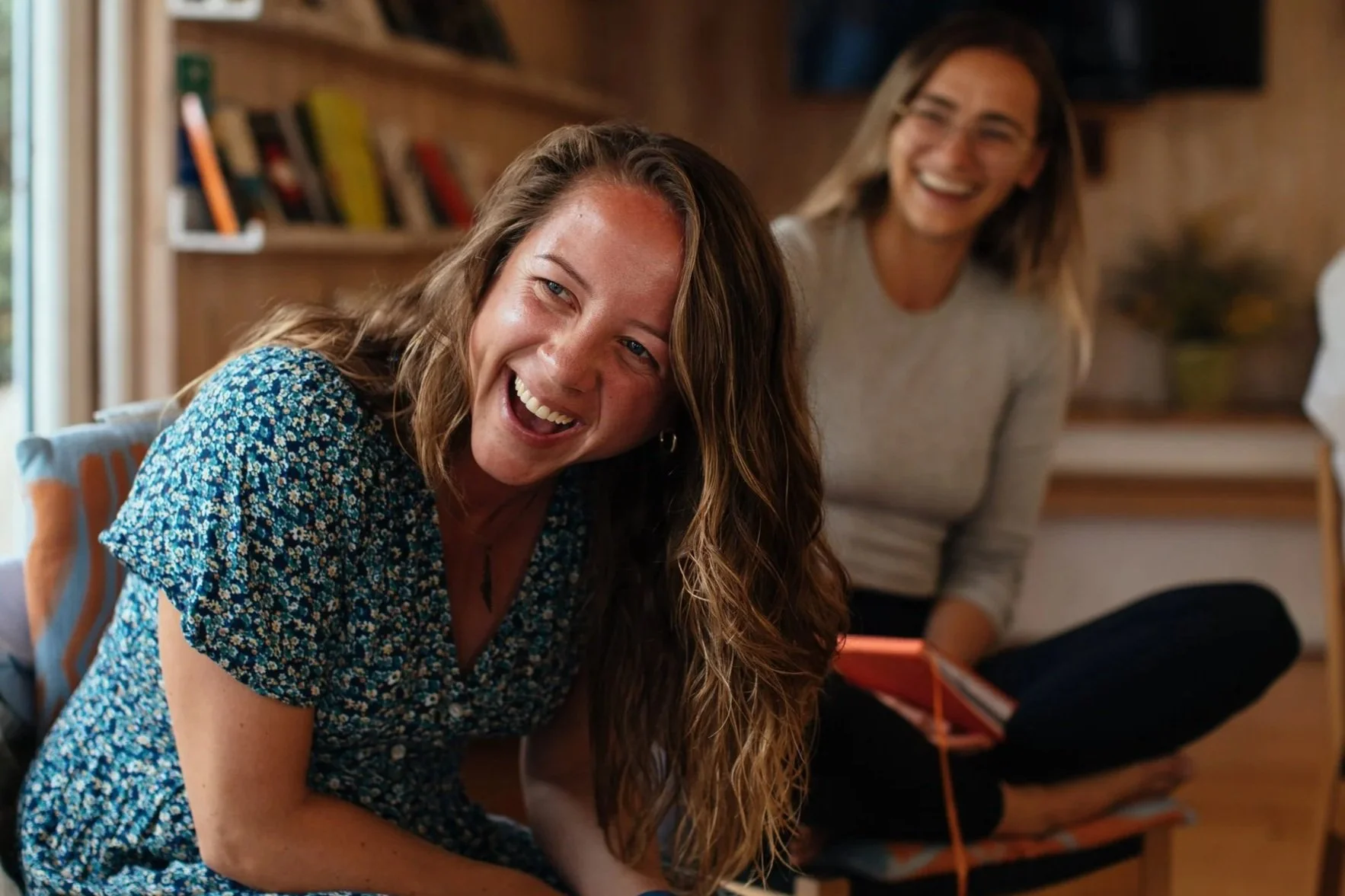
Hello, I’m Holly.
I offer creative writing retreats in Pembrokeshire, online writing groups, book mentoring and editorial support.
I’d love to hear from you. If you have any questions about my retreats or how we might work together, please get in touch using the form below.