How to Find Your Writing Voice: Lessons from Miranda July
I'm often asked who my favourite authors are, and Miranda July is almost always somewhere on my list.
I can count on one hand the number of times I've reread a book (too many books, not enough time), but I've read July's The First Bad Man twice.
I was heartbroken at the time, and needed a reliable dose of joy. Miranda July was it.
Recently, I found myself turning to her again. I needed a short story to assign to my ten-week online creative writing workshop, and after a conversation with my students about voice, I decided to explore July's back catalogue for something we hadn't read together before.
Over the last four years of teaching creative writing, I've assigned so many of July's short stories, particularly from her 2007 collection No One Belongs Here More Than You, that I thought I might have exhausted her work.
So I was delighted to come across The Metal Bowl, a short story published in The New Yorker that I'd somehow never read.
It was like discovering a secret episode of your favourite television show. I curled up on the sofa in my office and found myself laughing out loud, heart singing by the end.
What makes Miranda July's writing voice so distinctive?
What I love about Miranda July is what I love about the broader genre of what I've come to call 'hungry, batshit female fiction'.
Other writers I'd put in this category include Sheena Patel, Naoise Dolan, Madeleine Cash, Ottessa Moshfegh and Nicole Flattery.
What connects these writers, for me, is their voice: the deliciously, relatably neurotic ways their female characters navigate their desires, fantasies, shames and ambitions in a world so often defined by powerlessness and constraint.
Yet in telling these mad, irreverent and often surprisingly tender stories, these writers embody freedom and female emancipation on the page.
How to develop your own writing voice
For writers looking to learn from July, I don't think it's about mimicking the zaniness of her work (unless that feels true to you!).
Rather, so much of what we think of as 'voice' comes from a writer getting very close to what, in their experience, is intimate, strange and true.
One of the things I try to encourage in my Genre Fluid Writing Group is the courage to develop a voice that is idiosyncratically your own.
This can be surprisingly difficult.
So much of what makes us distinctive is also what makes us feel vulnerable. We might worry that our particular obsessions are too strange, our experiences too specific, or our ways of seeing the world too peculiar to be of interest to anybody else.
But the extraordinary thing about literature is that the opposite can be true.
There is so much universality to be found in the courage to be particular.
I want writing to feel like a missive from another writer's hidden universe to my own.
That's precisely what I experience whenever I read Miranda July. Her work reminds me that the strangest, most embarrassing and seemingly inexplicable parts of ourselves might be precisely where our most interesting writing begins.
Finding your voice means giving yourself permission to be particular
If you're struggling to find your writing voice, one place to begin is by paying attention to the things that genuinely interest you, rather than what you imagine other people might want to read.
What do you find yourself returning to? Which experiences, questions, memories or contradictions feel particularly alive to you? What might you write if you weren't worrying about whether anybody else would understand?
These are questions worth exploring, whether you're writing fiction, memoir, poetry or creative nonfiction.
Developing a distinctive writing voice isn't necessarily about becoming more flamboyant or experimental. Sometimes it's about allowing yourself to be more precise, more attentive and more truthful about your own experience.
And sometimes, finding that freedom means learning to write without immediately judging or censoring what emerges.
If you're struggling to reconnect with your creative practice, I've also written about how to start writing again after a long break, including some of the practices that have helped me return to my own writing.
Miranda July's best short stories to read
If you loved July's novels All Fours or The First Bad Man, I cannot recommend her short stories highly enough.
Both The Metal Bowl and Roy Spivey are available through The New Yorker, albeit behind a paywall. I think they're worth the subscription, and her collection No One Belongs Here More Than You is well worth buying too.
If you read either story, I'd love to know what you think.
In particular, I'm interested in which writers make you feel this way: whose work gives you permission to be a little more fully, strangely, unapologetically yourself?
Make space to develop your writing
If you're looking for support to develop your own writing voice, I offer several ways to work together.
My online genre fluid writing group brings together writers of fiction, creative nonfiction and poetry to explore literary craft, experiment with new techniques and receive supportive feedback on their work.
For writers seeking more individual guidance, I also offer one-to-one writing mentoring, providing personalised feedback, encouragement and support for your writing projects.
And if you're longing for uninterrupted time to write, my writing, meditation and digital detox retreats in Pembrokeshire offer space to deepen your creative practice alongside a supportive community of fellow writers.
Whatever stage you're at, I believe that your particular way of seeing the world matters, and that your writing deserves the time, attention and encouragement it needs to flourish.
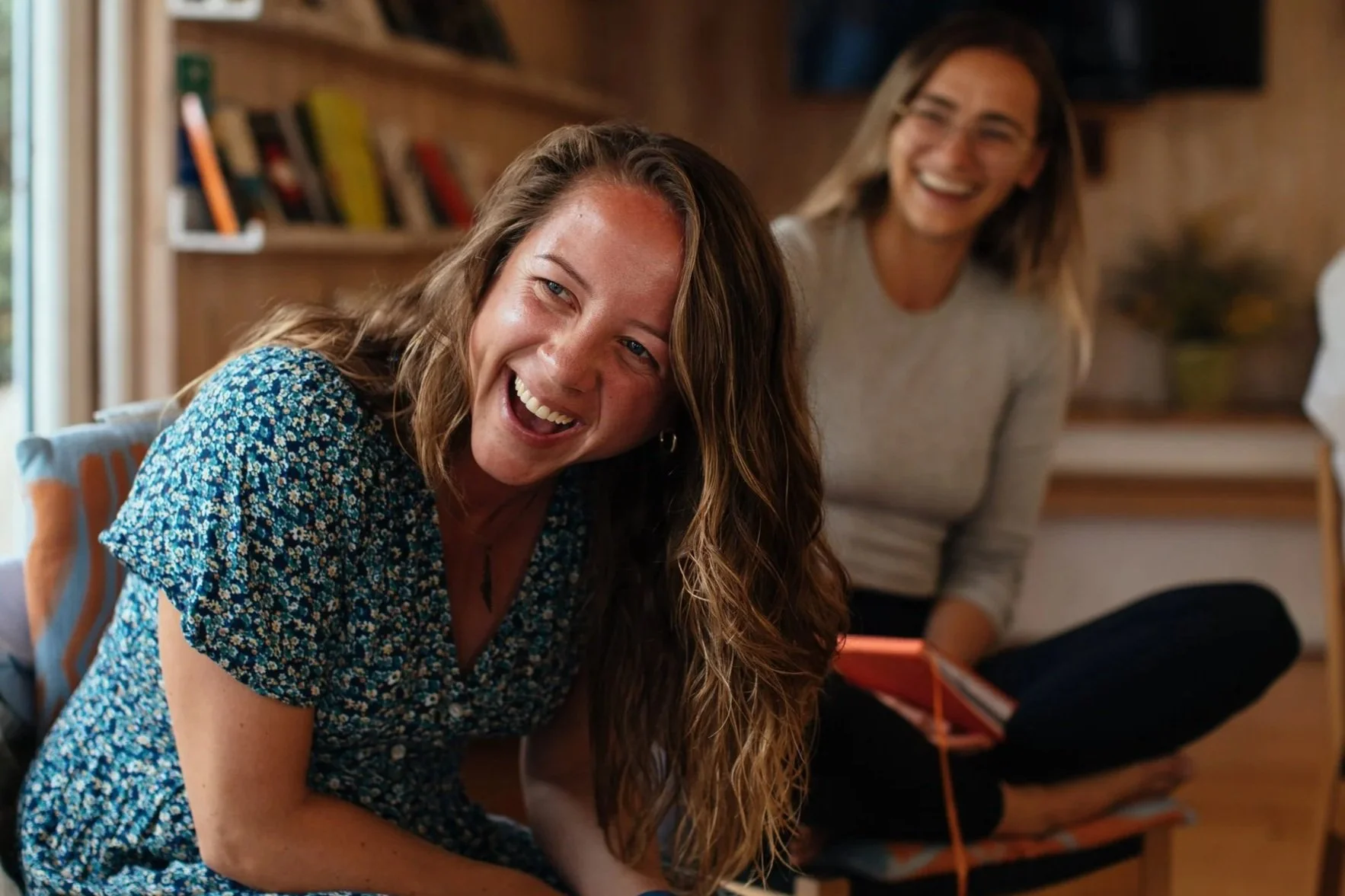
Hello, I’m Holly.
I offer creative writing retreats in Pembrokeshire, online writing groups, book mentoring and editorial support.
I’d love to hear from you. If you have any questions about my retreats or how we might work together, please get in touch using the form below.